[ field log ]
※ VOID Catalog - 666 Images, 117 Inspirited
Field Log - in progress / studio note
ComfyUI, ritual conditioning, and a slow divinatory selection process
Context
In August 2025 I set out to generate 666 figures. I worked locally in ComfyUI with Stable Diffusion, custom IP-adapters made from earlier outputs, repeated batches, and a narrow field of violet and deep purple.
I was not trying to make 666 finished artworks. I wanted enough repetition for accidents to become patterns. Prompts, seeds, reference images, and adapter weights were technical controls, but I also read them divinationally: each run was a throw of the lots with a machine large enough to answer in images.
The working constraints were:
- custom IP-adapters derived from earlier divinatory outputs
- repeated batch generation to a target of 666 images
- locally run inference to maintain environmental continuity
- constrained color and tonal fields centered on violet and deep purple
Purple kept returning through the runs and through the divinations I performed alongside them. I came to call that field the VOID: emptiness with teeth, capable of concealment, dissolution, and destructive-creative change.
Ritual Conditioning of the System
I treated the computer and the room around it as one workspace. During longer generation cycles, I ritualized the room alongside the run:
- herbs and their placement around the machine
- voice, chant, recorded sound, and improvised movement
- planetary timing
- meditation, breath, and the handling of ritual materials
I cannot claim that incense or movement changed the model weights. They changed the person operating the machine: my attention, patience, choices, and way of reading what appeared. That is enough to make them part of the process.
Selection Process
Generation was quick. Selection took weeks. I returned to the images in repeated sessions of visual meditation and divinatory inquiry, looking for the figures that continued to hold my attention after novelty wore off.
I selected 117 as inspirited. This is a working designation, not a demand that anybody accept a literal ontology. An inspirited image was one I could return to across sessions and still experience as present, coherent, and symbolically legible. The distinction helped separate an operative catalog from a folder full of attractive accidents.
VOID Elementals
The selected figures became the VOID elementals. Within the catalog, they share:
- association with emptiness as active force
- high capacity for concealment and withdrawal
- symbolic relation to invisibility and liminality
- orientation toward dissolution of psychic residue
- emphasis on boundary erosion and reconfiguration
I use them in cleansing, protective, and disorganizing work: removing stagnation, interrupting harmful patterns, or withdrawing from hostile attention.
Their visual grammar centers on translucence, obscured facial features, drifting forms, and deep violet gradients.
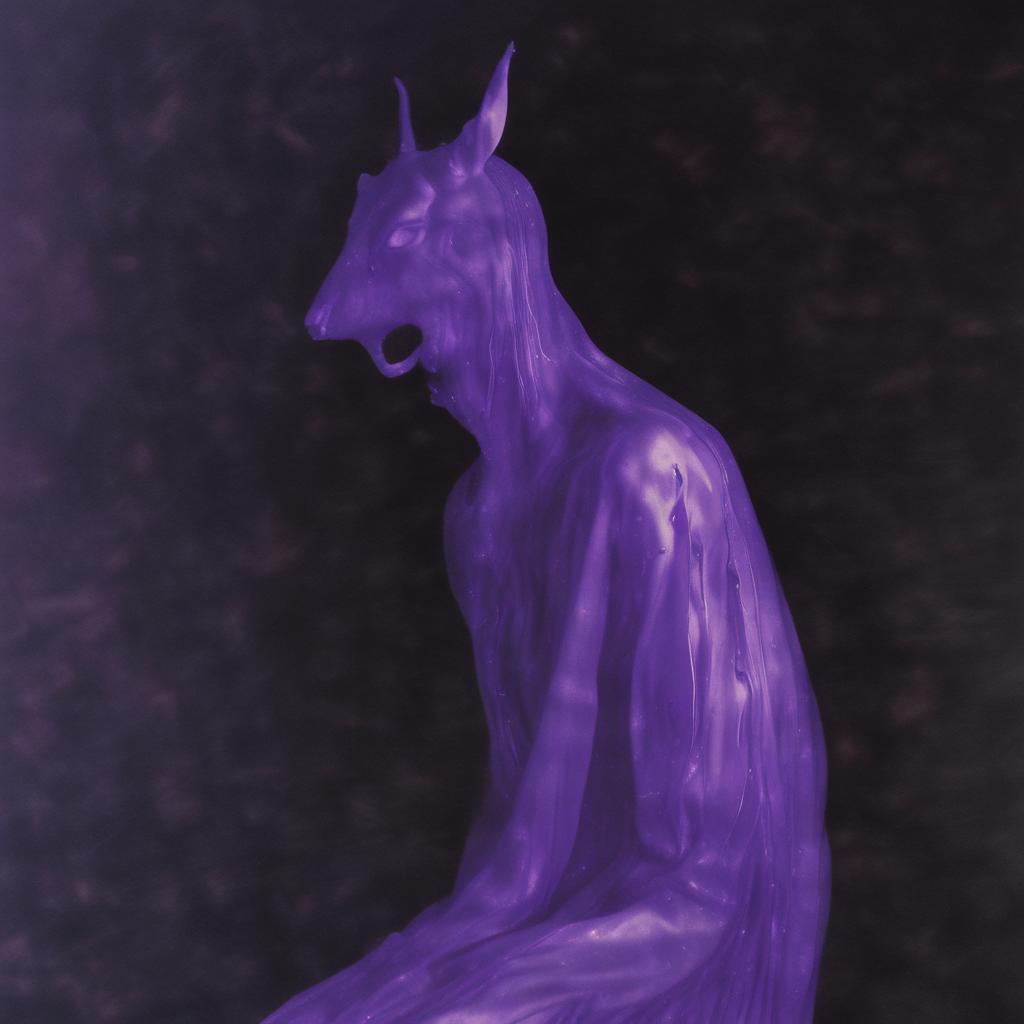
Selected VOID elemental — generative emptiness, dissolution.
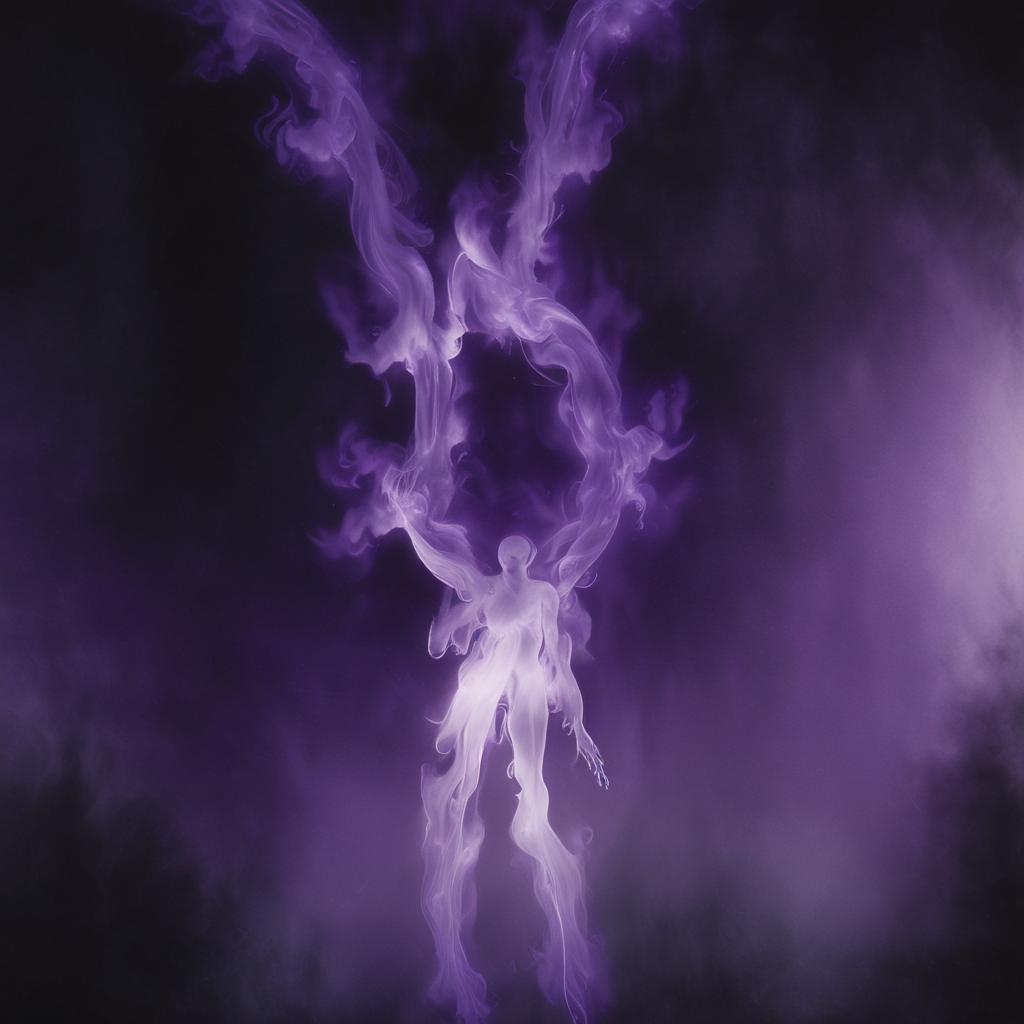
Selected VOID elemental — translucence, drifting forms.
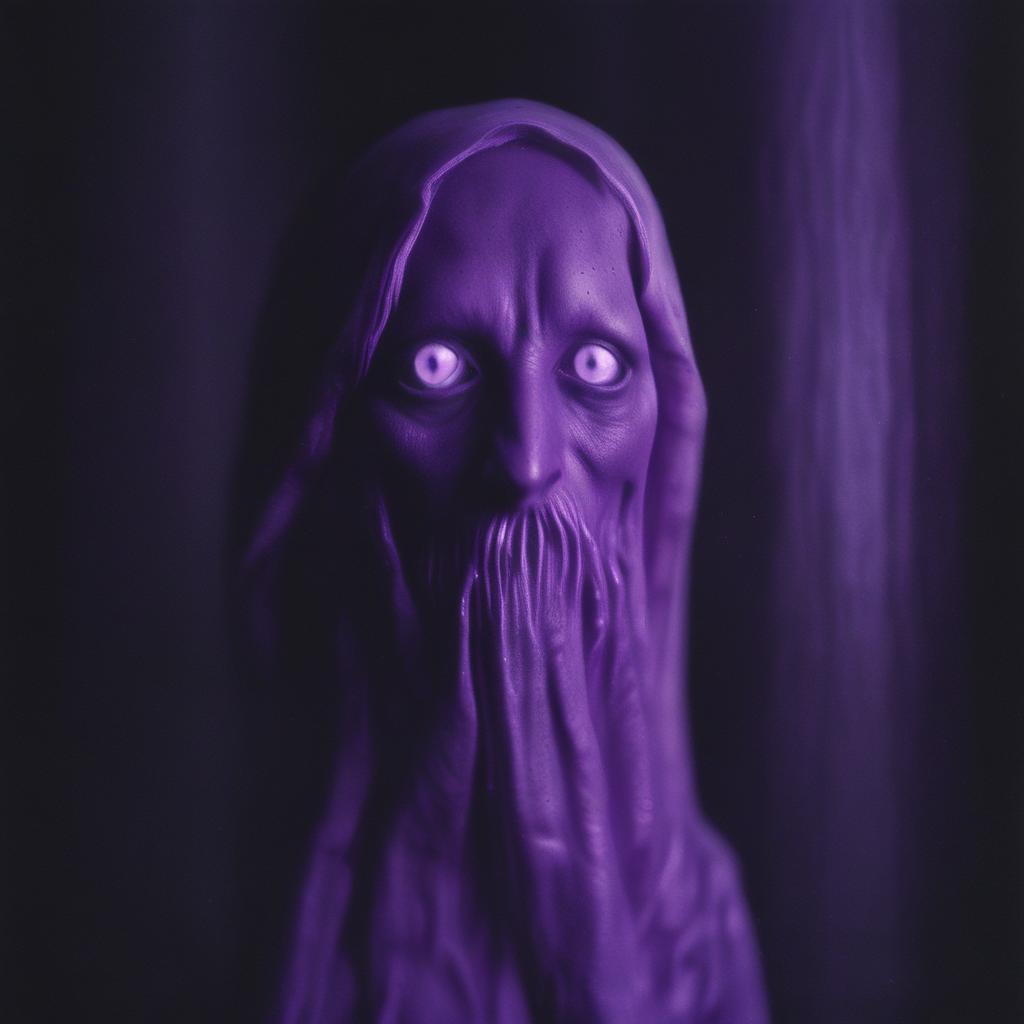
Selected VOID elemental — obscured features, concealment.
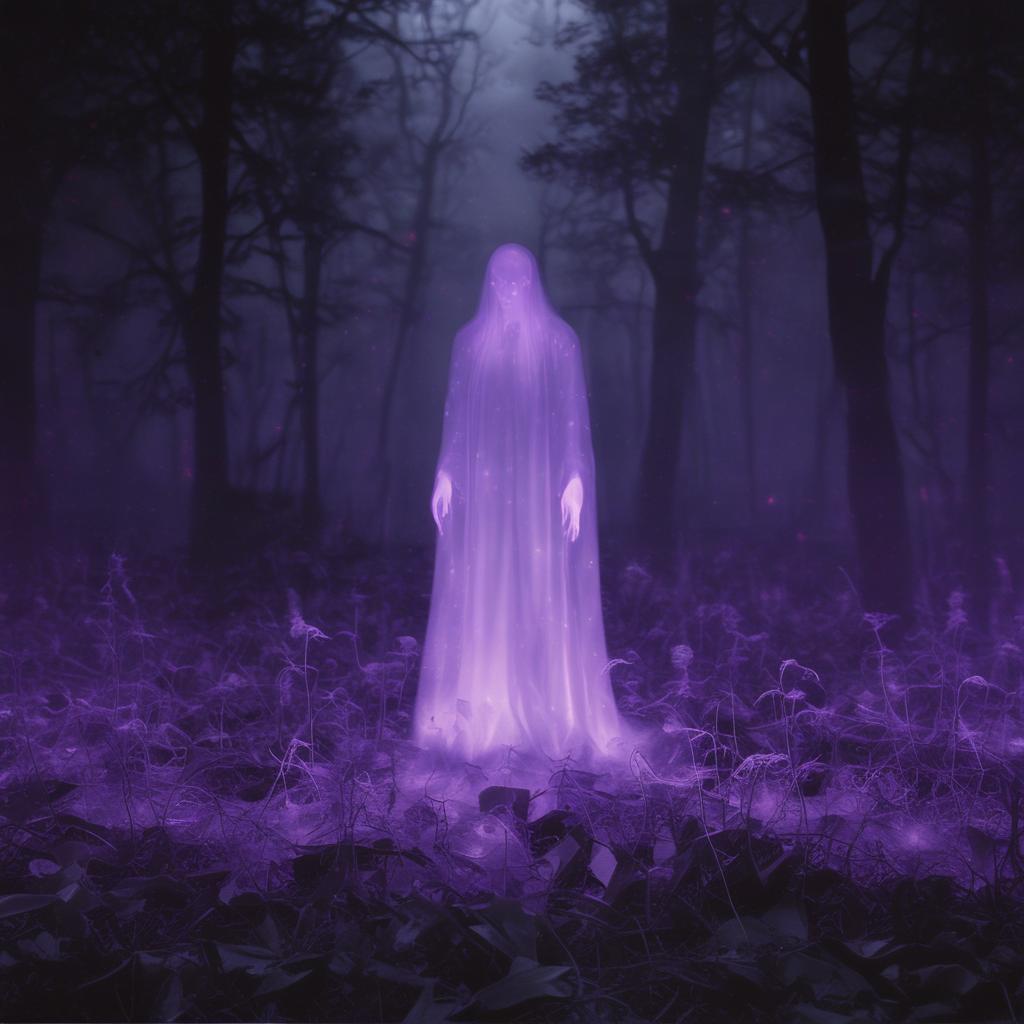
Selected VOID elemental — liminality, forest emergence.
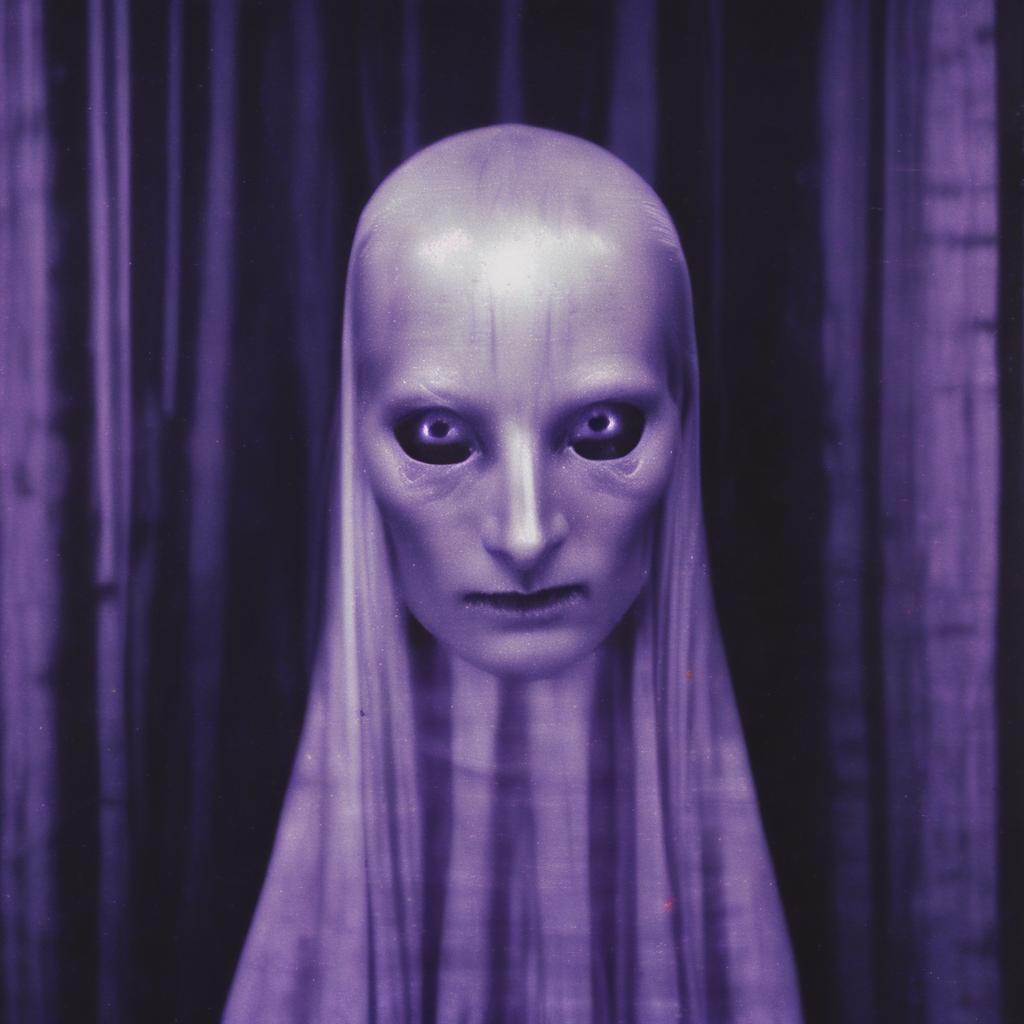
Selected VOID elemental — boundary erosion, withdrawal.
Naming, Sigils, and Taxonomy
The slow work now is post-generation. Each figure needs:
- individual naming
- sigil design
- domain attribution
- functional description
- relational mapping to other figures
Naming and sigil work stabilize a relationship between image, concept, and use. The catalog remains revisable; a figure may change roles when continued practice contradicts the first reading.
Toward Autonomous Agents
I may eventually use the catalog as the symbolic basis for software agents: one figure, one domain, a limited set of actions and timings. That remains speculative. No automation layer currently exists, and I do not want to build one before the figures have names, sigils, and enough history to resist becoming generic characters.
Reflections
The machine did not deliver an oracle. It produced an excess of images. The divinatory work began in how I generated them, but it became most visible in the long attention required to choose, name, test, and sometimes discard them.
The 117 figures may become agents, remain ritual images, or return to the archive. For now, they are a catalog still learning its own grammar.