[ field log ]
※ Rebuilding Wetware Gallery
Field Log - in progress / studio note
A portable exhibition room for the browser
Context
November 2025
I spent November rebuilding Wetware Gallery from the ground up. The first version proved that the idea could work; this one has to be stable enough for other artists to use.
The current version uses Three.js with React Three Fiber. I am keeping it light enough to deploy without specialized hardware or a proprietary platform. A visitor should be able to enter through an ordinary browser and understand how to move before the room asks anything more of them.
That requirement reaches into every scene. Loading, movement controls, media playback, and exits need to behave consistently even when the exhibition changes. The container should remove technical chores for an artist, not hand them a new pile disguised as creative freedom.
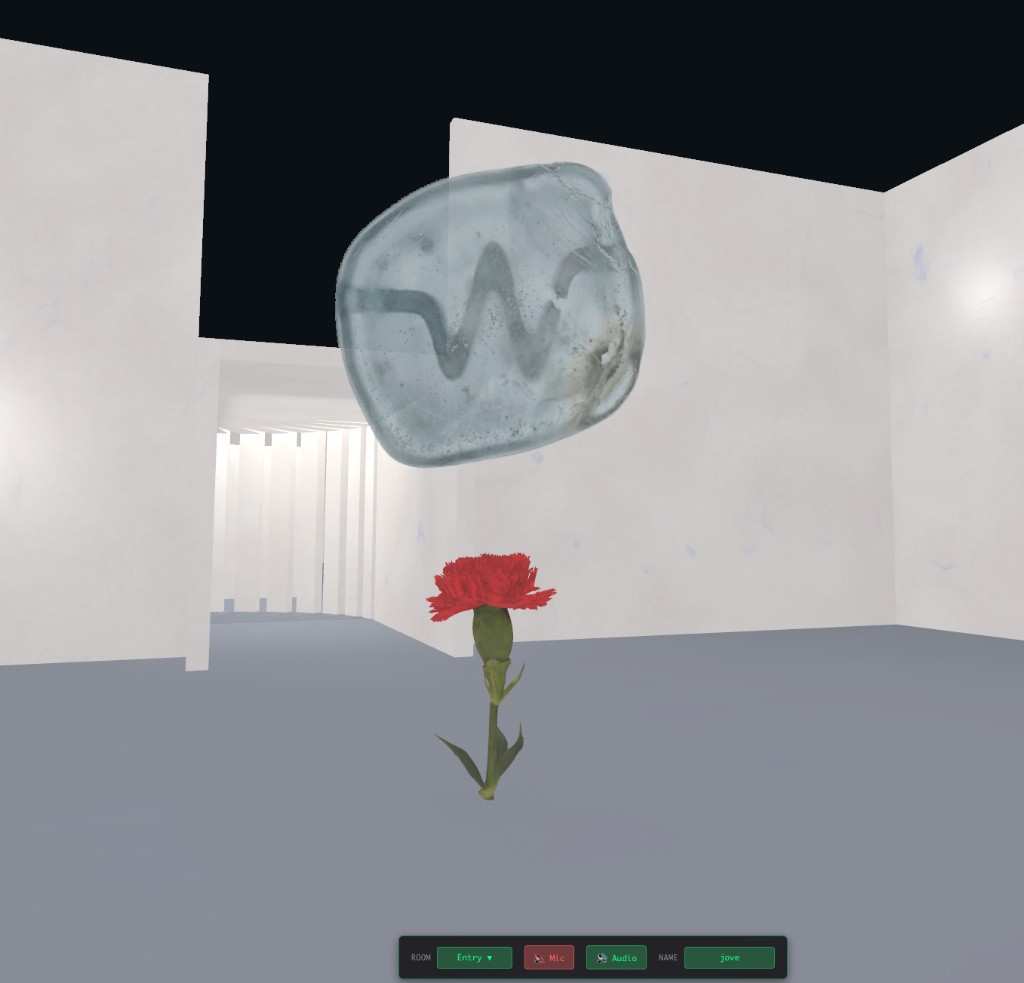
WIP lobby environment — threshold space with curated objects, ROOM/Entry controls visible.
Development Tracks
The rebuild has three active tracks:
-
The Entry Room — The lobby now contains the first cues for scale, movement, and pacing. The red carnation, translucent object, and entry controls have to establish the character of the gallery while also teaching navigation. It is a room, not a disguised loading screen.
-
Repeatable Exhibition Scenes — I am building scene structures for video planes, volumetric objects, shaders, text, and audio. The difficulty is giving artists enough range without making every exhibition a custom software project.
-
The First Exhibition — I am drafting criteria for the reopened gallery. The main question is practical: which works gain something from scale, latency, proximity, or shared presence in a browser room? Not every digital work needs to become spatial.
The challenge is restraint. The stack needs to remain lean, the navigation legible, and the gallery quiet enough to hold somebody else’s work without swallowing it.
Wetware is still an experiment. For now, the goal is modest: make one durable room on the web, invite artists into it, and let the work be stranger than the platform.