[ field log ]
※ Mars-Hour Candles
Field Log - in progress / studio note
Copal, mugwort, rosemary, and a small collective scent test
Context
In December 2025 I spent several Mars hours pouring candles from beeswax, infused oils, resins, and herbs associated with heat, force, clarity, and protection. I wanted a scent that could mark the beginning of martial meditation or performance preparation before any visible action occurred.
Scent changes a room slowly. It arrives before some people notice it, clings to fabric, and outlasts the flame. That duration made it useful material for a performance experiment.
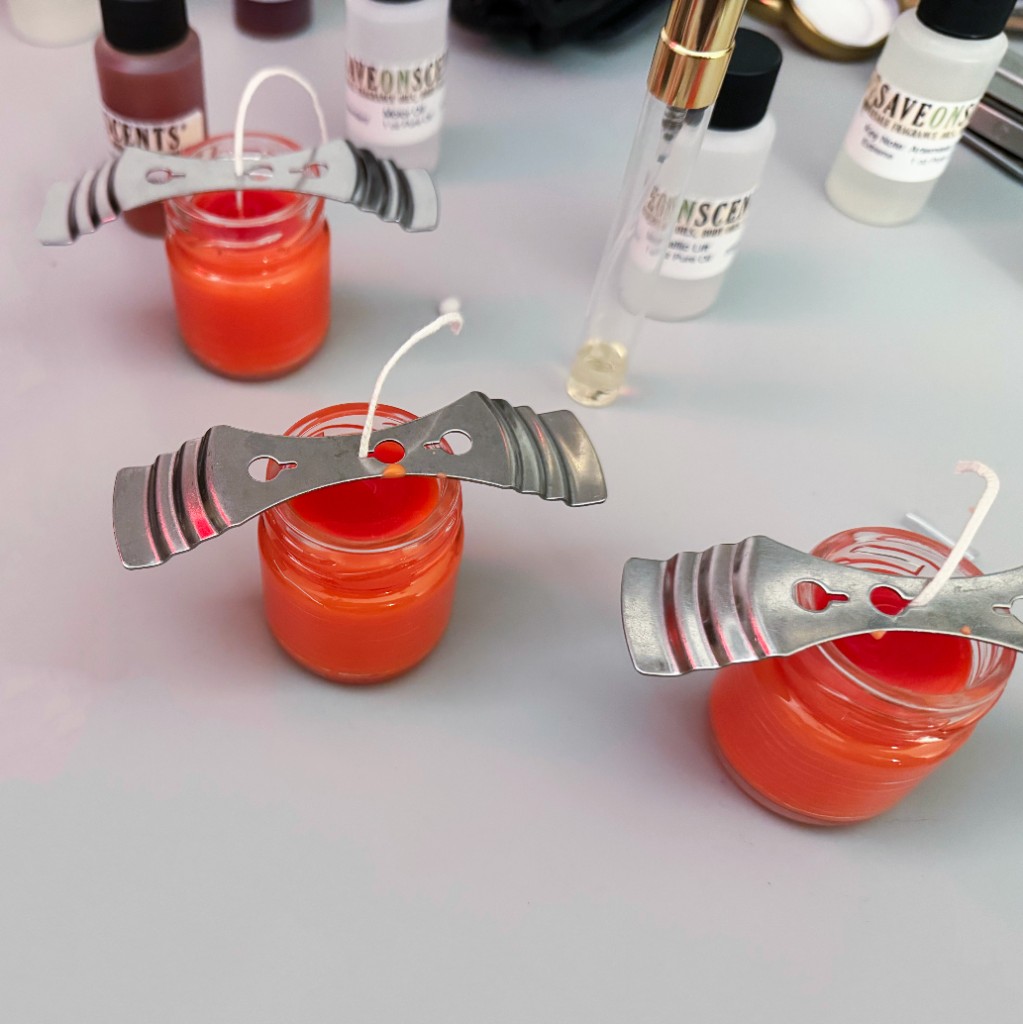
Martial scent candles prepared and curing during Mars hour — testing resin/oil blends for throw and participant response.
Materials and Methods
Botanical and Aromatic Palette
The working palette was:
- Copal resin (heat, clearing fields)
- Mugwort (activation, dream-edge states)
- Rosemary (clarity, focus)
- Bay leaf (assertion, thresholding)
- Black pepper / spice infusions
- Beeswax + mixed oil carriers (medium control)
- Minimal synthetic fixatives for stability and throw
I chose for sharpness, persistence, and tension, not conventional pleasantness.
Candle Construction Protocol
- Measure beeswax and oil ratios to ±2g.
- Infuse selected botanicals in warm oil baths to transfer volatile compounds.
- Strain and blend with resin tinctures.
- Pour into uniform glass jars while maintaining Mars hour alignment.
- Use tension wick holders to center and align wick for even combustion.
- Cure for 24–72 hours before testing scent throw.
Experimental Conditions
I poured during designated Mars-hour blocks in a workspace cleared of strong ambient scents. Initial lighting was timed from the same ephemeris data. After curing, three friends joined me as co-observers and described what they smelled and felt.
This was a small qualitative session, not a controlled study. The notes record language, movement, and differences among the four of us.
Observations
- Resin-heavy blends traveled farther through the open room; spice blends stayed closer to the candle.
- Rosemary-dominant blends were described as clearer and easier to meditate with.
- High-resin blends divided the group. Some experienced them as focused or charged; others found the tension unpleasant.
- People leaned toward some blends and paused their movement around others.
- A few blends kept drawing attention back to the same area of the body. “Attentional echo” became our shorthand for that experience.
Collective Testing
I recorded feedback through:
- sensory descriptors
- somatic effects
- emotional valence
- space perception shifts
- preference ratings
The disagreements were as useful as the shared descriptions. They made it clear that no blend could be called calming, focusing, or martial for every body in the room.
Integration Into Practice
Possible uses in future performances include:
- Entrances/Exits: marking threshold moments
- Transitions: supporting shifts between stages
- Focus windows: anchoring attention for martial segments
- Post-peak landing: aiding somatic completion
- Audience atmosphere: introducing an environmental cue without a visible source
Reflections
The clearest result was temporal: scent unfolds, saturates, and dissipates. It can mark a transition without asking the audience to look anywhere. The less comfortable result was variability. A blend that helped one person focus made another want distance.
That difference is now part of the form. Any performance use will need consent, ventilation, a scent-free route, and an easy way to leave the aromatic field.
Next Steps
Next I plan to compare the same blend across different planetary hours, keep concentration and room size consistent, and continue developing blends for Moon, Venus, and Mercury. If I introduce heart-rate or task data later, it will be exploratory and kept separate from the participants’ own descriptions.
Notes
This work remains non-prescriptive and permission-based. The candle is an invitation into a particular atmosphere, not a claim about what another person’s body should feel.