spiritMesh
AI hypertext ritual
An interactive hypertext ritual beginning with a desire, an obstacle, and an offering.
Recorded interface demonstration · 2:20
A participant enters spiritMesh by naming a desire, an obstacle, and a symbolic offering. A custom GPT uses these inputs to generate interactive material and actions for a ritual. I made it to explore how a changing narrative might become a way of working with desire and spiritual agency.
I wrote system instructions to turn abstract desires into nodes, links and interactive HTML/CSS. The visual direction changes the encounter: offset fonts, motion and color can carry agitation; cool and natural colors, slow flow and uniform sans type can suggest calm. Elements respond to hovering and clicking, and some can be dragged. In the 2024 version, these instructions guided the generated code without automatic validation.
In a cohort working with desires about identity and self-change, some connections felt uncanny to me and others. I experienced them as bringing unconscious associations into view.
The recorded interface demonstration documents the 2024 work. It offers a view of the interaction and the material it returned.
Recorded interaction
The walkthrough moves from an animated ASCII figure to three prompts: a desire, what blocks it, and what the participant is willing to offer. The resulting page contains colored text panels with controls for visualizing desire, exploring obstacles, releasing attached threads, and transformation. The participant activates the panels to encounter shapes and moving visual elements.
The 2024 production note lists Twine (twee), SugarCube, Three.js, and ChatGPT. The stills below show the desire-entry screen and one panel from the resulting encounter.
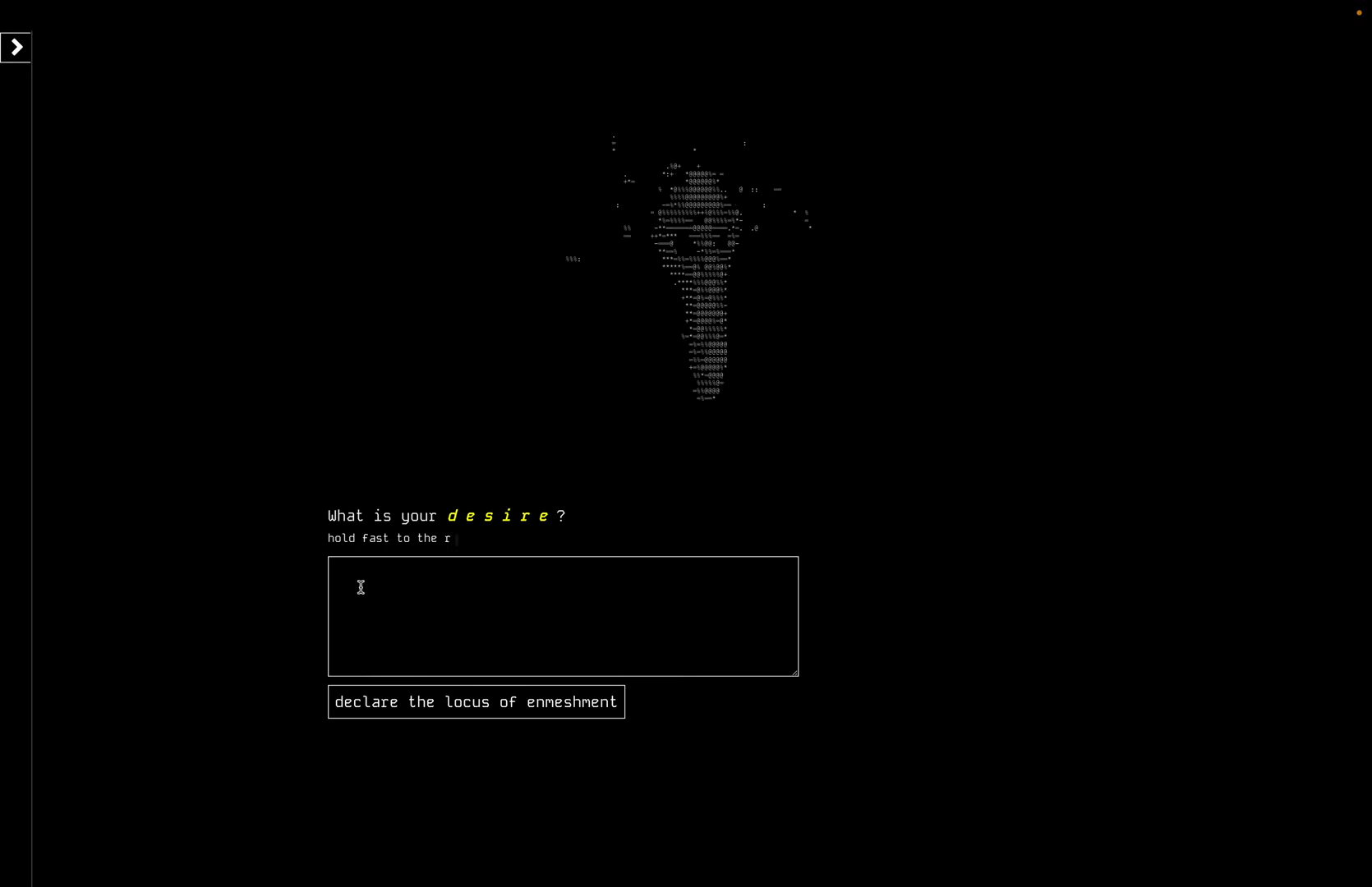
Desire-entry screen · 1:01
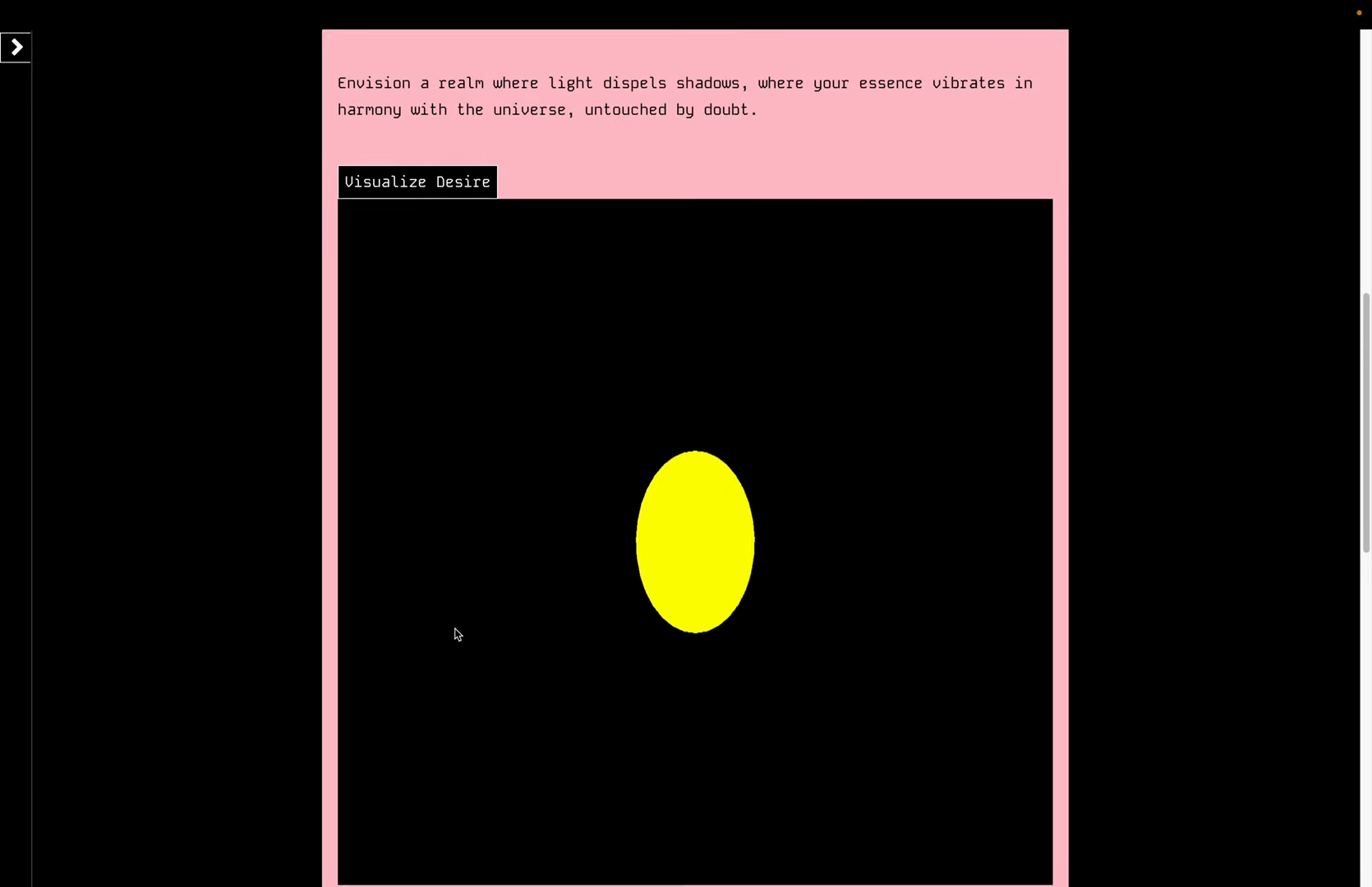
One of the generated interactive panels · 1:53