[ writings ]
§ YOLOROBICS
Queer Nightlife, Ritual Practice, and the Parties We Kept Alive (2011–Present)
YOLOROBICS began in 2011, before it had a theory attached to it. Some of the earliest gatherings took place on the BYU campus, where gathering as queer people carried real risk. We kept the parties cautious, small, and difficult to document. Discretion was not an aesthetic choice. It was part of how the work survived.
The project has continued for fifteen years in clubs, private homes, outdoor sites, and temporary rooms across Utah and California. It has appeared at Public Works and The STUD in San Francisco, but many iterations remain deliberately absent from the archive. A nightlife practice is partly made from what can be shown and partly from what the people in the room agree to keep among themselves.
From a Private Room to a Public Floor
Moving YOLOROBICS into public venues changed its scale, but not its central practice. A private gathering can rely on relationships that already exist. People arrive knowing one another’s signals, histories, and limits. In a club, strangers enter the composition. The door, bar, staff, sound system, and expectations attached to the venue become additional collaborators.
That shift made hospitality more visible as an artistic problem. The room has to communicate before a host can explain it. Lighting can invite movement or make people feel watched. The placement of a speaker can gather a crowd or divide one. A performer can open a social possibility, but the same gesture can close it when somebody does not understand the invitation.
Public presentation also creates pressure to make nightlife legible as spectacle. YOLOROBICS resists that pressure. The work is not improved simply because more people can see it or because a camera can document it. Scale is useful only when the gathering can keep its intimacy, responsive pacing, and permission to remain partially hidden.
A Party That Can Change Shape
Each YOLOROBICS takes the character of its site. A home asks for different movement than a club. Outdoors, sound disperses and the edges of the gathering become porous. In an underground or improvised venue, access, neighbors, power, ventilation, and the possibility of interruption all enter the composition.
We work with those limits instead of imposing a fixed event format. Sound, light, furniture, entrances, crowd density, and the location of water or places to rest influence how people move through the night. The effects are often immediate. Raise the volume and conversation breaks apart. Change the tempo and bodies reorganize. Open a congested corner and the social map of the room changes with it.
I have worked in nightlife as a dancer, DJ, promoter, booker, sound technician, and lighting operator. YOLOROBICS gathers those roles into one practice. The party is the artwork, but it is also the material test: What makes a room feel permissive? When does intensity become exhaustion? How does a host guide attention without commanding it? What makes someone feel invited to participate, and what gives them permission to step away?
No arrangement guarantees a good night. Sometimes a room never coheres. Sometimes a musical choice arrives at the wrong moment, the space becomes too crowded, or an interruption breaks the spell. That uncertainty is part of working live with other people. We prepare carefully, then listen to what the room is actually doing.
Arrival, Rupture, Return
The gatherings tend to move through an arc: arrival, accumulation, rupture, suspension, release. This is a dramaturgical structure, but not a script. It is closer to watching weather. The pace can change when a new group enters, when the dance floor thins, when somebody needs care, or when a track opens an unexpected route through the night.
Repetition and exhaustion can move attention away from the ordinary self. I use ekstasis for this displacement: the moment identity becomes less fixed and the dancer is pulled into a wider relation with music, bodies, symbols, and whatever else has entered the room. It may feel spiritual, erotic, frightening, hilarious, or all four at once.
Participants often use clothing, makeup, gesture, and invented forms of address to build temporary personas. These are not disguises so much as instruments. A persona can loosen an old social reflex or make a desire visible enough to follow. Queer nightlife has always understood that sometimes the self needs a costume before it can tell the truth.
The peak is only one part of the work. Transitions and aftermath matter just as much. Consent must be able to change as the night changes. People need somewhere to cool down, drink water, regroup, or leave. Cleanup and conversation are part of the return. The party does not end at the last track; it ends when the people who held it have found their way back to themselves.
An Archive with Holes in It
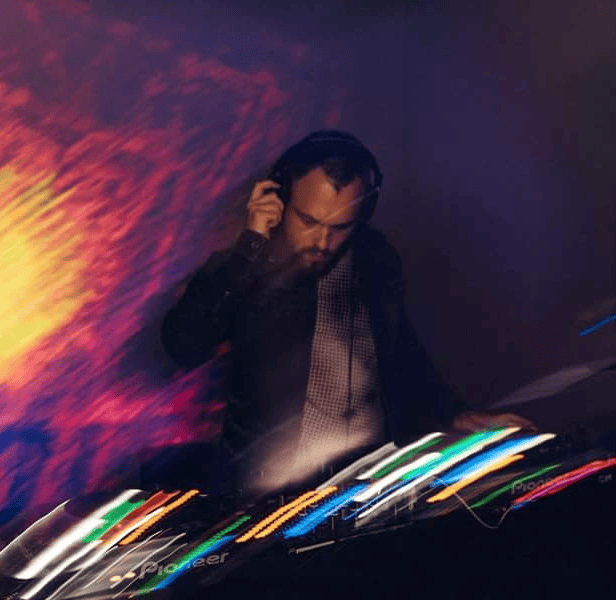
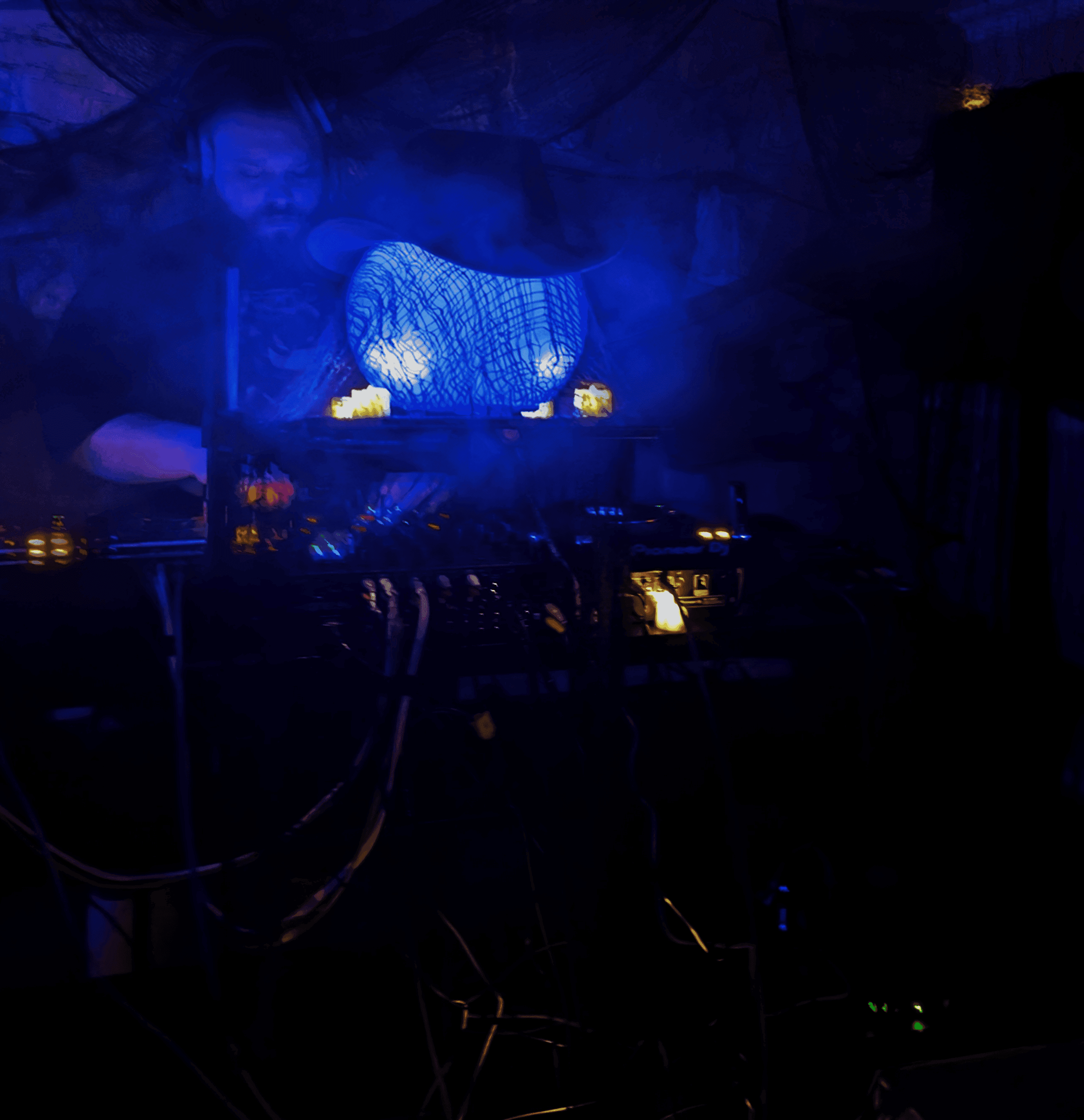
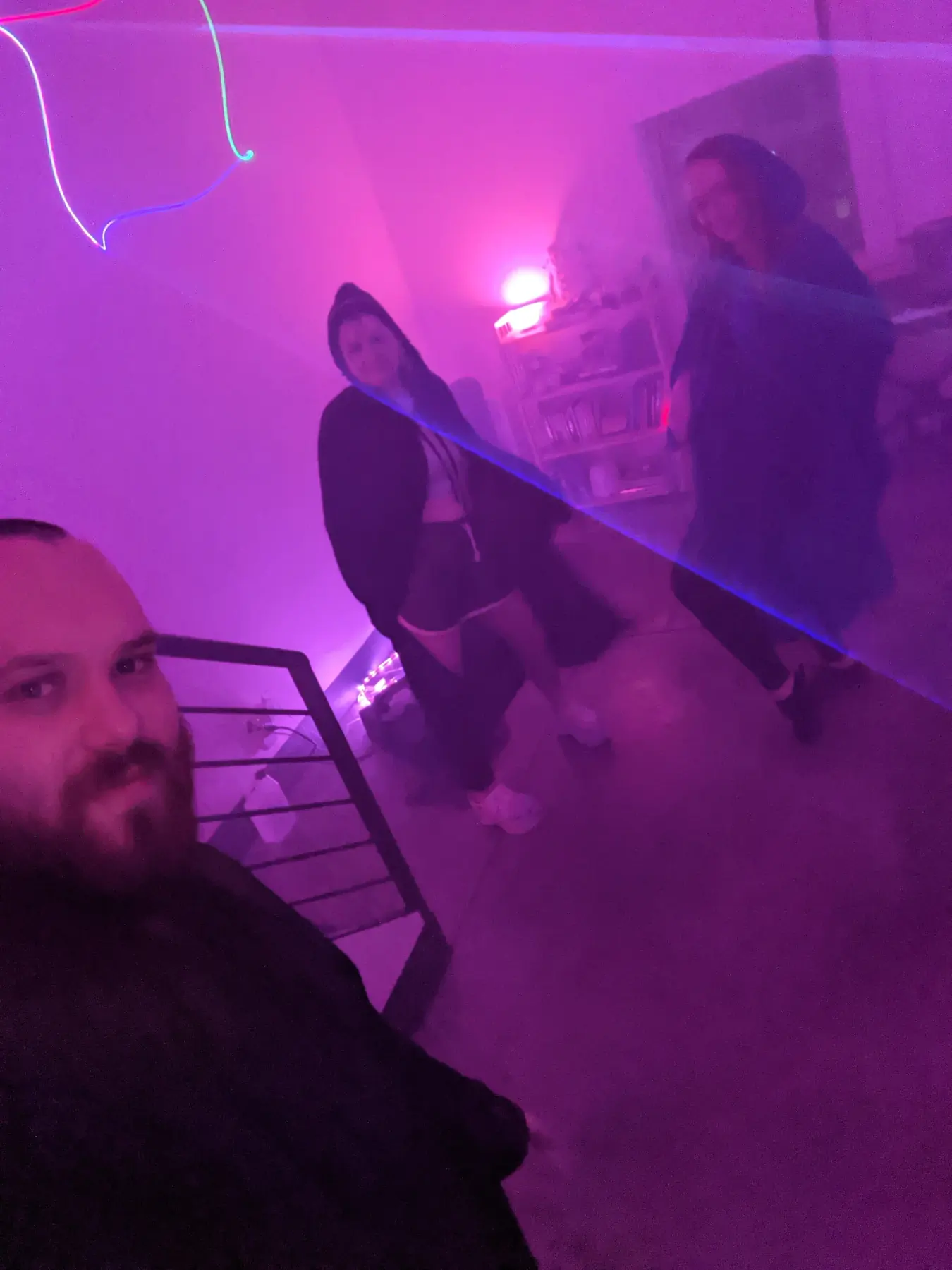
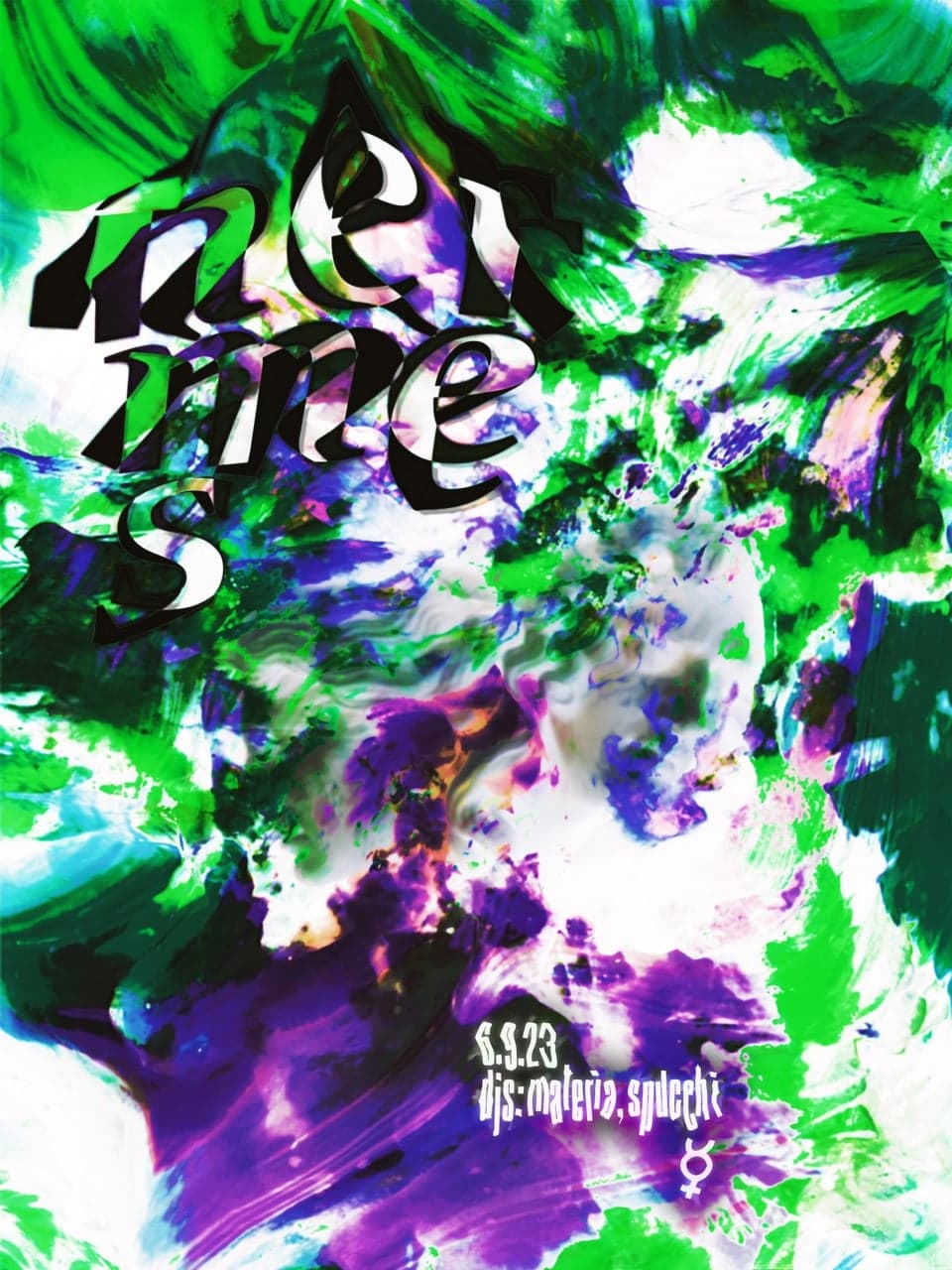
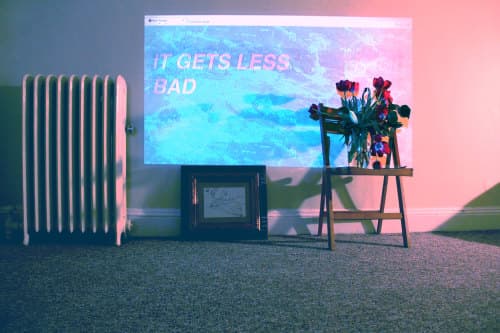
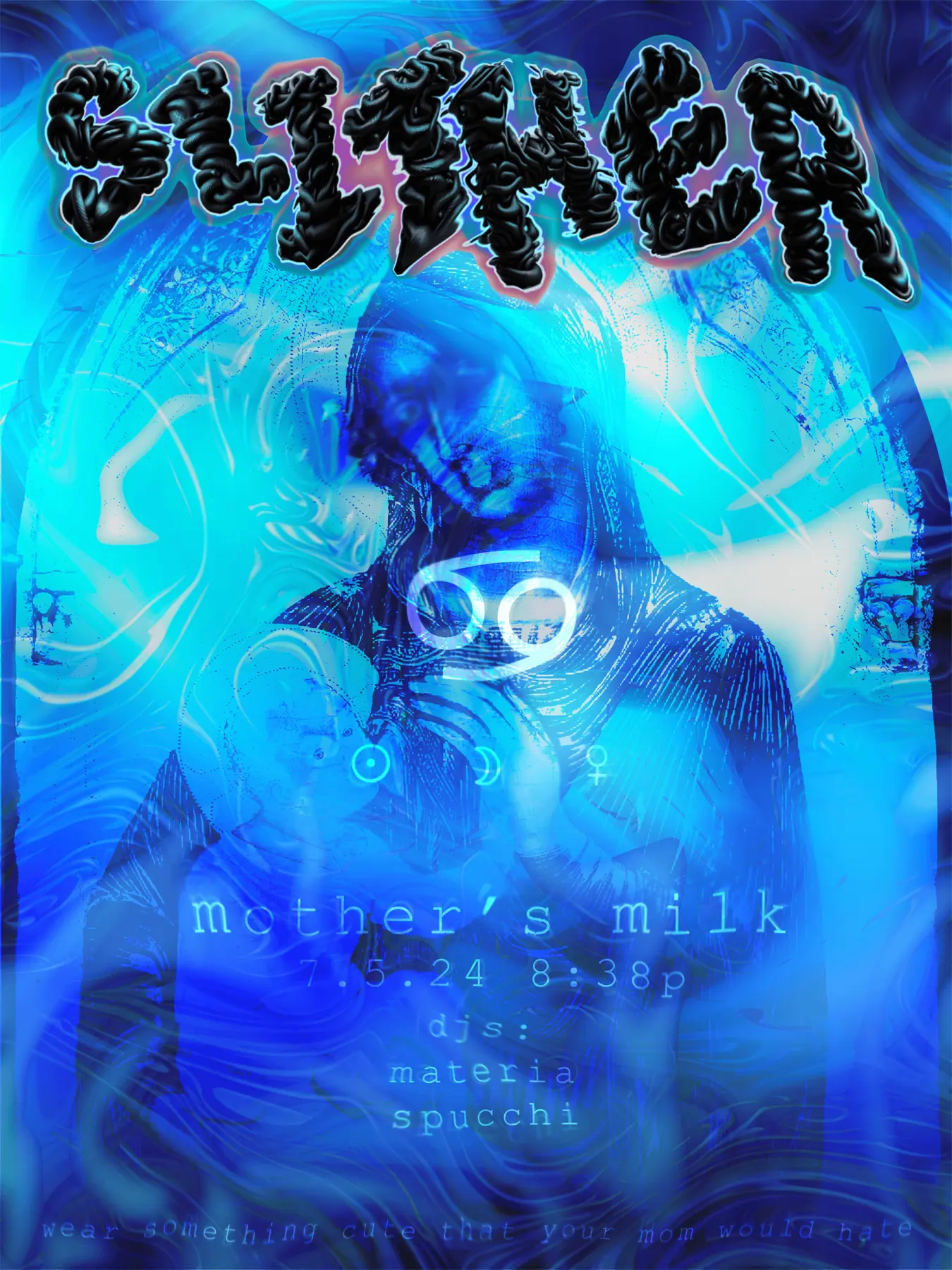
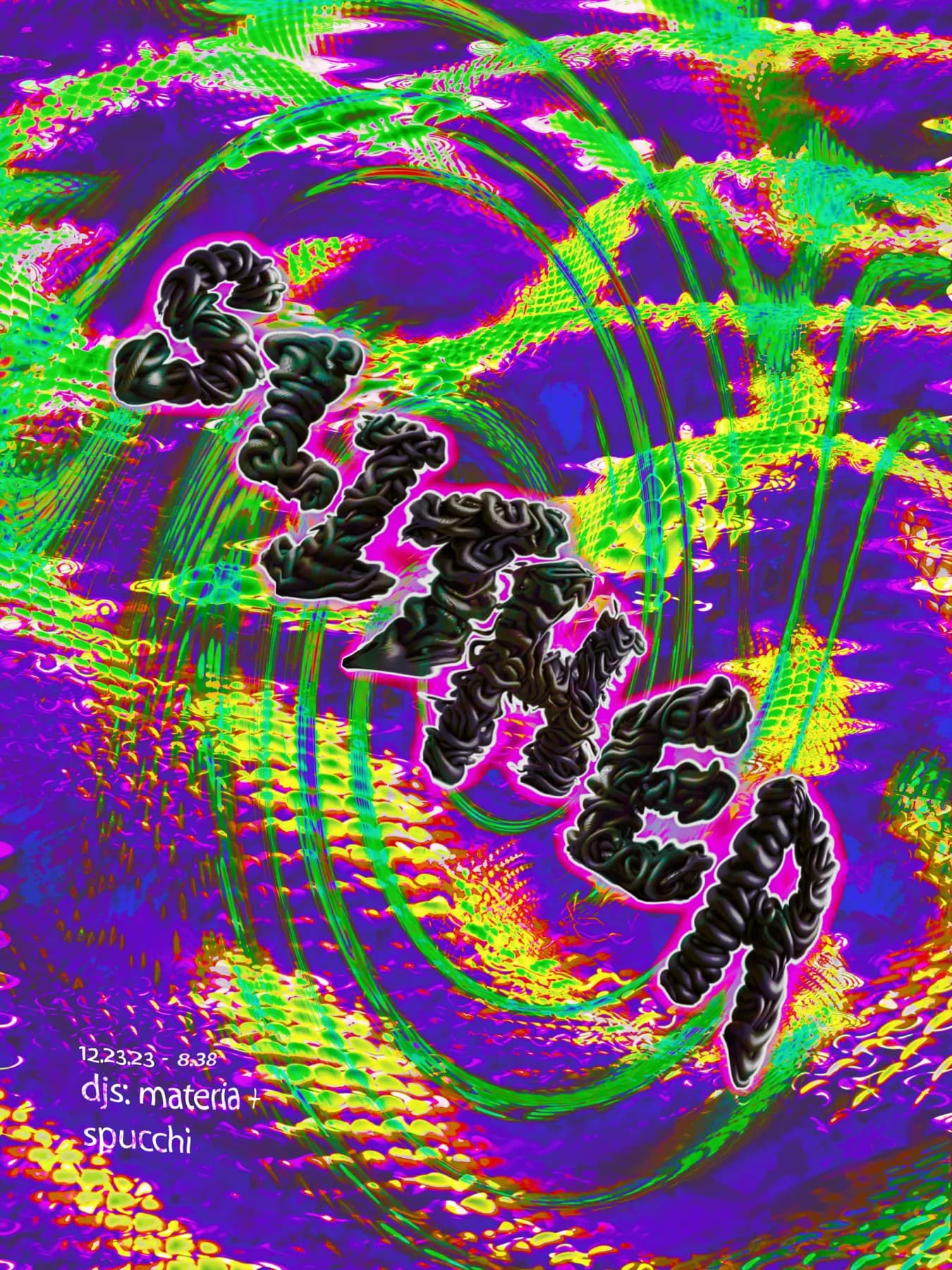
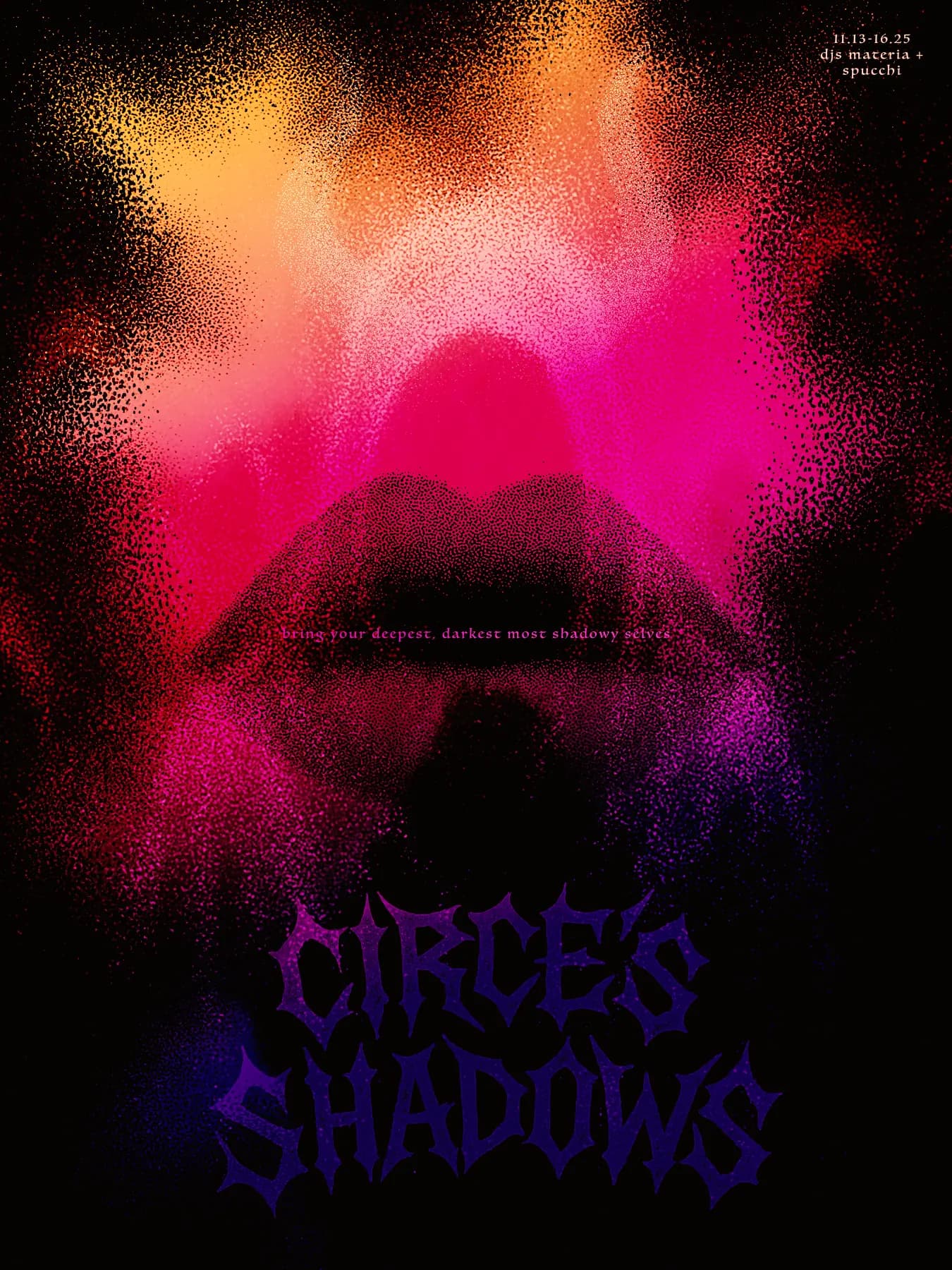
The photographs and posters here record only a portion of the project. Posters preserve dates and names. A room photograph catches lighting, bodies, or the remains of an installation. None of them can hold the full event, and some events should not be held that way.
That incomplete archive feels honest to the work. Nightlife depends on presence, trust, and disappearance. The fact that a party cannot be fully recovered is not a documentation failure. It is evidence that the gathering belonged first to the people who were there.
YOLOROBICS continues because the questions continue. How can a shared state be cultivated without coercion? How much intensity can a group sustain before it stops being useful? How do we make room for pleasure, risk, care, and genuine surprise? What do fifteen years of dancing together teach that a single performance cannot?
I do not think of the project as a search for transcendence. It is closer to a long conversation conducted through parties. The vocabulary is bass, light, costume, flirtation, fatigue, food, cleanup, and the small decisions by which people keep one another safe enough to become strange.
Fifteen Years Is a Different Medium
A single party can be judged as an event. Fifteen years has to be understood through relationships. People leave and return. Musical tastes change. Bodies acquire injuries, limits, and new forms of stamina. What felt daring in 2011 may feel ordinary now, while an old gesture can suddenly gather a new charge because the people performing it have changed.
The duration has made YOLOROBICS less interested in novelty and more interested in attention. We have learned to recognize one another’s signals, to know when a room needs more heat and when it needs relief, and to let an evening remain small when expansion would flatten it. The project persists through mutual aid, humor, shared labor, and the willingness to keep revising what a party is for.
This is why I call it a practice. The work does not sit still long enough to become a finished object. It is renewed whenever people gather, prepare a room, choose what to play, and decide to trust one another with the night.

With deep gratitude to the people who made YOLOROBICS possible and sustainable: Keebee and YOLA, the original space holders and practitioners, butoh artists who have been part of the group from the beginning—for their love, support, mutual aid, and great humor; Coco/Materia, our incredible selector; and Circe, healing, charming, and dear. This would not have happened, and could not have been sustained this long, without them.